Milne Bay’s story is also one of growers, gardeners and fishers. Follow the connections between mainland coffee country, island food gardens, coastal coconut groves and the waters that sustain communities.
FOOD, KNOWLEDGE & LIVELIHOODS
A history rooted in everyday life.
Food gardens and fishing belong at the centre of the region’s history, alongside its voyages and trading networks. The story begins with local knowledge and food for households, then extends through introduced crops, plantation economies, smallholder enterprise and today’s markets.
GGGI’s 2021 provincial assessment describes a diverse food economy of root crops, vegetables and fruit. Yams, sweet potato, cassava, bananas, aibika, beans, pumpkin, pawpaw and pineapple are among the crops it records. Horticulture here includes the gardens and fresh produce that sustain everyday meals, as well as crops sold for income.
R. Michael Bourke’s agricultural history records the introduction of beans, pumpkin, maize and watermelon to Woodlark by French Marist missionaries in 1847. Such introductions added to existing food systems; they did not mark the beginning of cultivation or local agricultural knowledge.
Later overseas trade linked coconut and copra with commercial shipping, alongside marine commodities such as bêche-de-mer and shell. Read this as a changing economic relationship, including colonial intervention, rather than a story in which export crops replaced all earlier livelihoods.
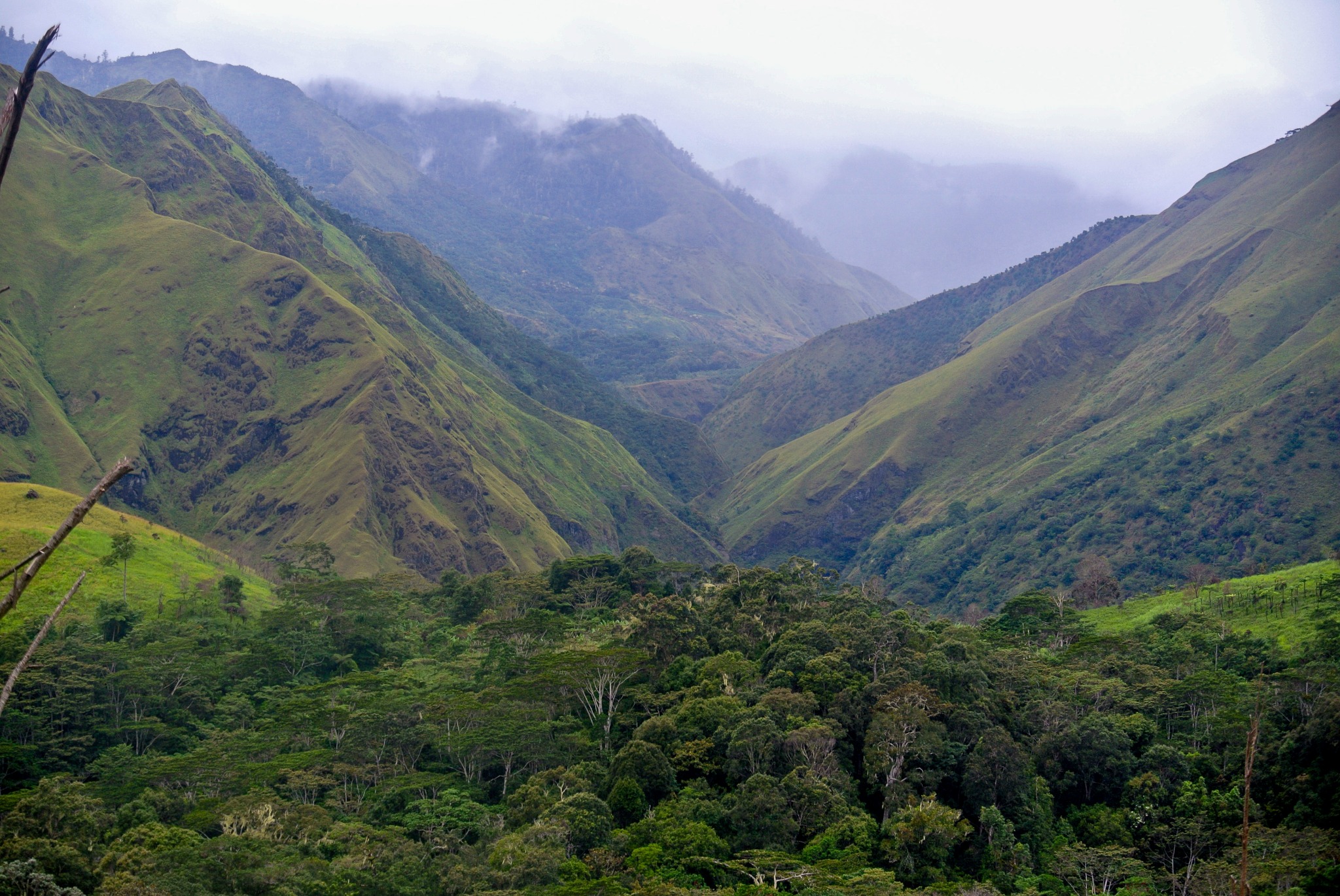
Agaun brings the province’s mountainous mainland into the picture. Coffee smallholders here connect Milne Bay with an agricultural landscape quite different from its atolls and lagoons.
Reporting in January 2015 documented a provincial government and Coffee Industry Corporation freight scheme taking Agaun coffee by air to Alotau, then onwards to Lae. In August 2025, NBC reported another CIC visit to Agaun and Rabaraba, with coffee awaiting transport. Getting the harvest to market is a recurring part of this story.
Cocoa is part of Milne Bay’s cash-crop economy and appears in the province’s development priorities. The 2021 GGGI assessment also records a decline in large-scale commercial cocoa and copra farming over the preceding two decades. That history matters when discussing rehabilitation, grower support and opportunities for local processing.
Coconut connects family gardens, coastal livelihoods and commercial production. Cool Earth’s account from its partner community of Wabumari describes families moving beyond selling copra to making virgin coconut oil, supported by training and work to find dependable buyers.
The crop’s economic story continues. In August 2024, NBC reported that Kokonas Indastri Koporesen had piloted a coconut production-cost survey in Milne Bay. Understanding growers’ real costs remains part of making the industry work for households.
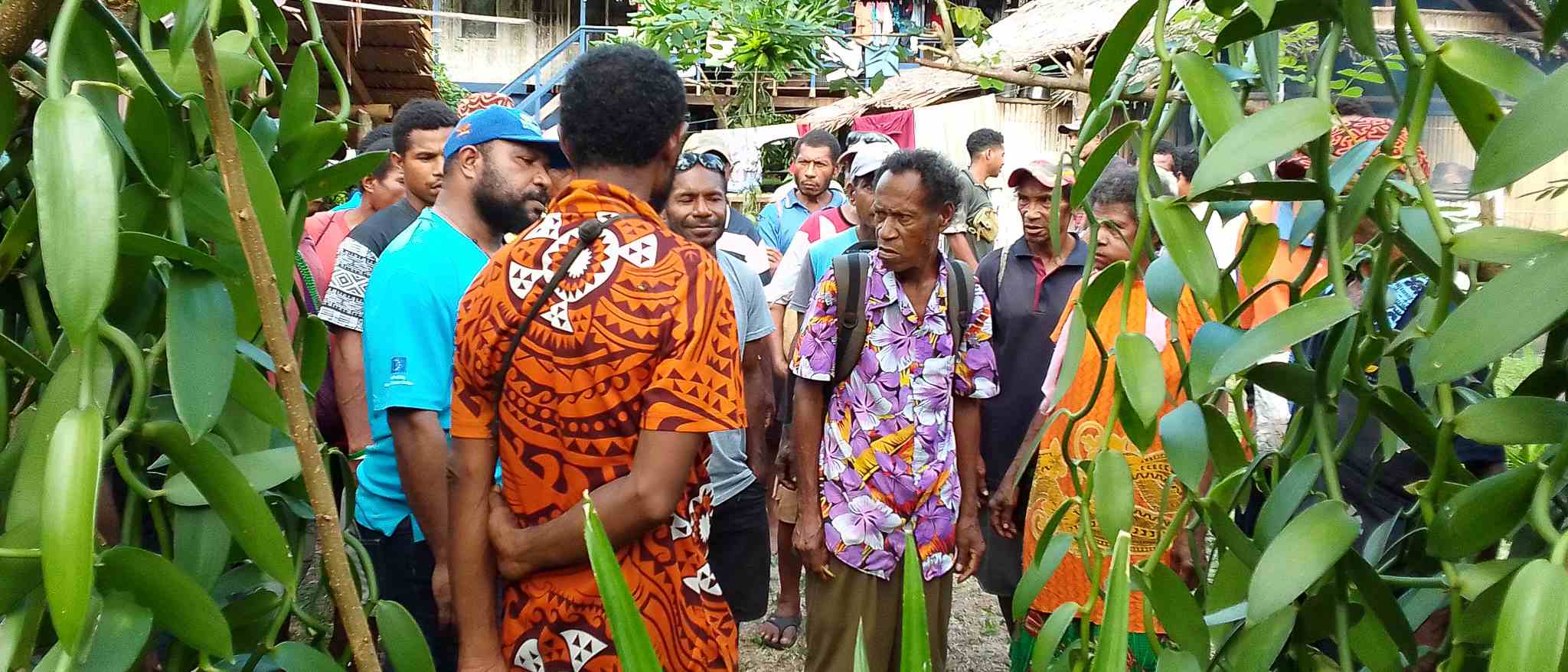
Vanilla has a documented local story. In August 2024, FAO reported a two-week training programme for Milne Bay growers, supported by farming groups on Fergusson Island in Esa’ala District and facilitated by PNG’s Department of Agriculture and Livestock.
The programme covered growing, harvesting and post-harvest processing. It offers a concrete example of skills being shared with lead farmers, rather than simply describing the province as a place with potential.
The spice story also includes nutmeg. ANU Press’s 2009 account of agricultural cash income records purchases of Milne Bay nutmeg by Paradise Spices for export as whole or ground seed. This is a historical example of local produce reaching a wider market, alongside the more recent vanilla training on Fergusson.
Oil palm is part of Milne Bay’s commercial agricultural landscape. New Britain Palm Oil’s operations page identifies Milne Bay Estates as an RSPO-certified operation, with estates, processing facilities and smallholder participation.
RSPO certification is a defined system involving standards and continued third-party verification. A certification claim belongs to the relevant operation and supply chain; it should not be applied automatically to every producer or every palm oil product from the province.
For a purchasing enquiry, ask the supplier for its current certificate, the scope it covers and the applicable supply-chain model. The operator’s published statement is linked here; this portal has not independently audited the operation.
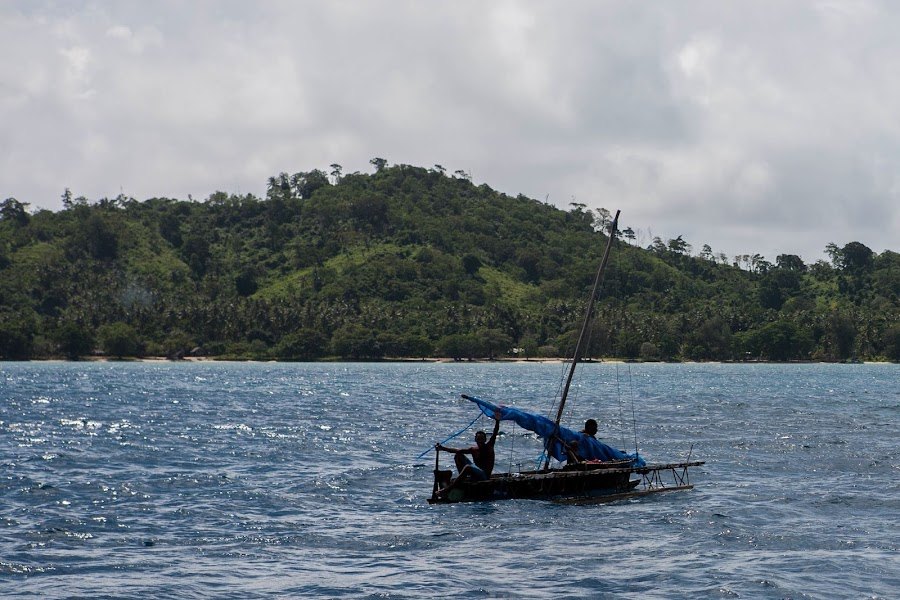
Louisiades sailing canoe · SY Harlequin cruising journal, 2012. The crew described trading with passing sailing canoes.
05 / FISHERIES & MARINE LIVELIHOODS
Food from the sea. Care for the source.
Fisheries history includes household food, local exchange and overseas trade. Marine commodities such as sea cucumber, trochus and pearl shell appear in PNG’s commercial trading history. These connections sit alongside the continuing importance of fish for communities’ own meals.
GGGI’s provincial assessment distinguishes coastal livelihoods from the offshore tuna industry and discusses community management of marine resources. It highlights mangroves, reefs and local institutions as important to the future of coastal fishing. Export figures alone cannot describe everything caught and eaten locally.
The province’s development plans include aquaculture, coastal fisheries and onshore processing. These are development priorities, not evidence that every proposed facility is operating. Buying seafood or arranging a fishing experience should begin with the relevant local operator and current fisheries requirements.
Local growers, co-operatives, processors and fisheries businesses are part of Milne Bay’s story. Their own profiles can bring together provenance, the people doing the work and a direct business connection.
Sources reviewed 23 October 2026. Historical accounts are dated in the text. Crop availability, transport and certification status require current confirmation with the relevant provider.